
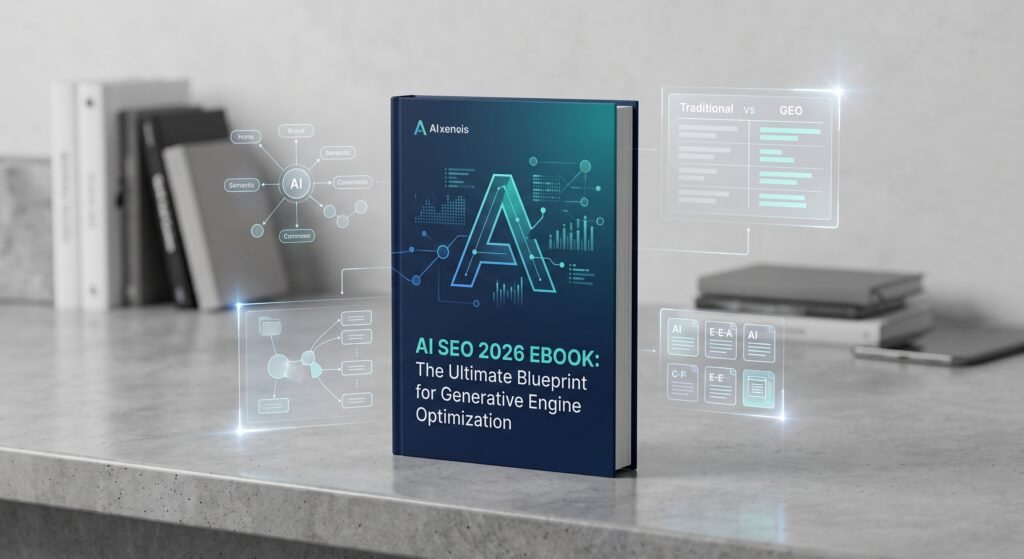
The digital discovery landscape has experienced its most dramatic transformation since the advent of mobile indexing. With generative search engines, conversational answer systems, and AI-driven answer engines taking precedence over traditional blue links, search engine optimization is no longer just about matching keywords. It is about establishing semantic entity dominance, securing citation authority, and mastering Generative Engine Optimization (GEO).
Navigating this new era requires a clear roadmap. This article provides a comprehensive overview of the modern search ecosystem, detailing the strategies outlined in the AI SEO 2026 Ebook. Readers will learn how to adapt content strategies to maintain high visibility, capture zero-click search share, and turn AI-driven interfaces into powerful sources of sustainable web traffic.
Navigating the Paradigm Shift: Traditional Search vs Generative Search
The search engine interface has evolved from a directory of external hyperlinks into a dynamic, synthesized answer engine. Understanding how generative algorithms process query intent is essential for remaining discoverable across modern discovery platforms.
- Query Fan-Out Mechanics: Generative systems break single, complex user prompts into multiple conceptual sub-queries, scanning the web for specialized answers simultaneously.
- Entity-Centric Indexing: Search engines evaluate pages based on interconnected concepts, relationships, and trusted brand nodes rather than isolated keyword phrases.
- Zero-Click Realities: Direct answers generated at the top of results pages handle informative queries instantly, changing how organic traffic flows to websites.
- Citation-First Visibility: Securing placement inside AI-generated summaries requires structured data, high fact-density, and consistent third-party brand validation.
Generative Engine Optimization (GEO): Core Technical Principles
Generative Engine Optimization (GEO) focuses on structuring digital assets so large language models can seamlessly parse, extract, and cite information. Technical execution relies on direct access and clear information architecture.
- Server-Side Rendered HTML: Complex JavaScript setups hide key content from AI crawlers; serving clean server-side HTML ensures immediate extractability.
- Unrestricted Bot Access: Verifying server logs and security layers prevents accidental blocks on legitimate AI indexing crawlers.
- Schema Graph Integration: Advanced JSON-LD structured data explicitly defines relationships between authors, organizations, products, and core entities.
- Fact-Dense Formatting: Content built with clear statistics, direct definitions, and structured tables yields significantly higher citation rates in synthesized answers.
SEO Framework Comparison: Traditional, AEO, and GEO
To build an effective search strategy, digital marketers must understand the distinct roles played by Search Engine Optimization (SEO), Answer Engine Optimization (AEO), and Generative Engine Optimization (GEO).
| Feature Category | Traditional SEO | Answer Engine Optimization (AEO) | Generative Engine Optimization (GEO) |
| Primary Goal | Rank on Page 1 (Top 10 Blue Links) | Win Featured Snippets & Voice Results | Earn AI Citations & Multi-Source Synthesis |
| Target Audience | Human Web Searchers | Question-Focused Users | AI Agents & LLM Synthesizers |
| Optimization Focus | Keywords, Backlinks, On-Page Tags | Schema, Q&A Formats, Direct Answers | Entity Graphs, Fact Density, Brand Footprint |
| Content Structure | Long-form articles with high keyword focus | Concise, 40-50 word direct answer blocks | Scannable, answer-first, multi-perspective content |
| Success Metric | Organic Clicks & Impression Volume | Direct Answer Captures & Voice Impressions | Citation Share, Entity Mentions, Agent Referrals |
Crafting Answer-First Content Structure for High Extractability
Content designed for modern discovery platforms must deliver value immediately. Leading with direct answers allows both human readers and automated systems to digest information effortlessly.
- Inverted Pyramid Writing: State the direct answer or resolution in the opening sentences before expanding into supporting context, methods, and nuanced analysis.
- Modular Formatting: Organize sections into self-contained units featuring descriptive headings, bullet points, and high-value takeaways.
- Semantic Anchor Definitions: Define industry terminology clearly using natural prose to assist AI algorithms in matching specific sub-topics.
- Removal of Filler Content: Concise, fluff-free writing increases fact density and improves automated readability scores.
Demonstrating Experience, Expertise, Authoritativeness, and Trustworthiness (E-E-A-T)
As automated content generation scales globally, search engines prioritize verifiable human experience and authentic brand authority. Demonstrating real-world credentials builds lasting trust.
┌─────────────────────────────────────────────────────────────────┐
│                    VERIFIABLE BRAND AUTHORITY                    │
└────────────────────────────────┬────────────────────────────────┘
                                 │
         ┌───────────────────────┴───────────────────────┐
         ▼                                               ▼
┌─────────────────────────┐                     ┌─────────────────┐
│  First-Hand Experience  │                     │ Off-Page Proof  │
│  - Proprietary Data     │                     │ - Digital PR    │
│  - Original Case Studies│                     │ - Co-Citations  │
│  - Expert Authorship    │                     │ - Video Proof   │
└─────────────────────────┘                     └─────────────────┘
- First-Hand Experimental Proof: Incorporating original case studies, proprietary dataset analysis, and field research provides unique signals that automated models cannot replicate.
- Transparent Author Credentials: Detailed author biographies highlighting industry experience reinforce content authority for both users and evaluation guidelines.
- Multi-Platform Digital Footprints: Strong brand presence across video networks, podcasts, industry forums, and news coverage validates real-world presence.
- Consistent Brand Co-Citations: Unlinked brand mentions on authoritative sites act as powerful trust signals for LLM discovery networks.
Measuring Success: Metrics That Matter Beyond Organic Clicks
Traditional performance metrics like raw keyword rankings and click-through rates no longer tell the whole story. Modern analytics strategies focus on brand influence, citation frequency, and conversion quality.
| Metric Name | Tracking Methodology | Strategic Value |
| AI Citation Share | Monitoring LLM answer outputs for target query sets | Measures brand visibility inside synthesized answers |
| Brand Entity Sentiment | Analyzing sentiment scores across AI-generated reviews | Indicates how conversational assistants perceive brand reputation |
| Omnichannel Referral Traffic | Aggregating visits from conversational platforms and forums | Tracks traffic originating outside traditional search bars |
| Zero-Click Conversion Impact | Measuring direct brand queries and assisted conversion pathways | Captures value generated by users informed directly on SERPs |
Actionable Roadmap for Implementing AI SEO Strategies
Applying modern optimization principles requires an organized, multi-step transition plan. Following a structured framework ensures technical stability and content relevance.
1.Conduct Technical Accessibility Audit:Ensure AI systems can crawl server-side code.
Verify server logs for AI user-agents, review security settings to prevent accidental bot blocks, and confirm all high-priority content is delivered in clean server-side HTML.
2.Map Entity Graphs and Schema Architecture:Establish explicit contextual relationships.
Implement comprehensive JSON-LD structured data across all assets, mapping clear connections between authors, brand entities, products, and core services.
3.Restructure Existing Content Assets:Convert pages into answer-first layouts.
Reorganize top-performing pages to lead with direct answers, add clear summary tables, and format complex steps using scannable bullet points.
4.Expand Off-Page Verification Footprint:Build trust across trusted external channels.
Secure digital PR features, publish original research reports, and cultivate authentic reviews on third-party industry platforms.
Frequently Asked Questions
What is the primary focus of the AI SEO 2026 Ebook?
The ebook provides a comprehensive framework for transitioning from traditional keyword optimization to Generative Engine Optimization (GEO). It covers technical server requirements, entity mapping, answer-first content structuring, and strategies for securing citations in AI-generated search summaries.
How does Generative Engine Optimization (GEO) differ from traditional SEO?
Traditional SEO focuses on positioning individual web pages in search engine result lists using keywords and backlinks. GEO focuses on structuring factual information, entity relationships, and brand context so generative engines can extract, synthesize, and cite the brand inside conversational answers.
Will traditional organic traffic decrease as AI search adoption grows?
Informational searches often resolve directly on search result pages due to AI-synthesized summaries, leading to higher zero-click rates. However, users who click through from AI citations typically demonstrate higher intent and better conversion potential, making citation visibility essential.
Why is entity clarity critical for visibility in modern search systems?
Generative search models process information through connected concepts and known entities rather than isolated strings of text. Clear schema markup, consistent brand messaging, and external co-citations help AI engines accurately identify, trust, and recommend a brand.
What is the fastest way to make existing content AI-friendly?
The most efficient path is reorganizing articles into an answer-first format. Lead each section with a direct, factual resolution, break down complex processes into scannable lists, add comparative data tables, and keep server-side HTML accessible to all search crawlers.
Conclusion
The evolution of digital discovery from link directories to generative answer engines represents a significant opportunity for forward-thinking brands and digital marketers. Success in this environment requires moving beyond surface-level keyword targeting and focusing on deep entity authority, technical extractability, and genuine, verifiable expertise.
By aligning site architecture with generative crawlers, converting long-form assets into answer-first formats, and maintaining a robust multi-platform presence, websites can maintain high visibility across both classic search engines and emerging conversational platforms. Implementing the frameworks outlined in the AI SEO 2026 Ebook ensures digital assets remain authoritative, discoverable, and highly effective for years to come.