
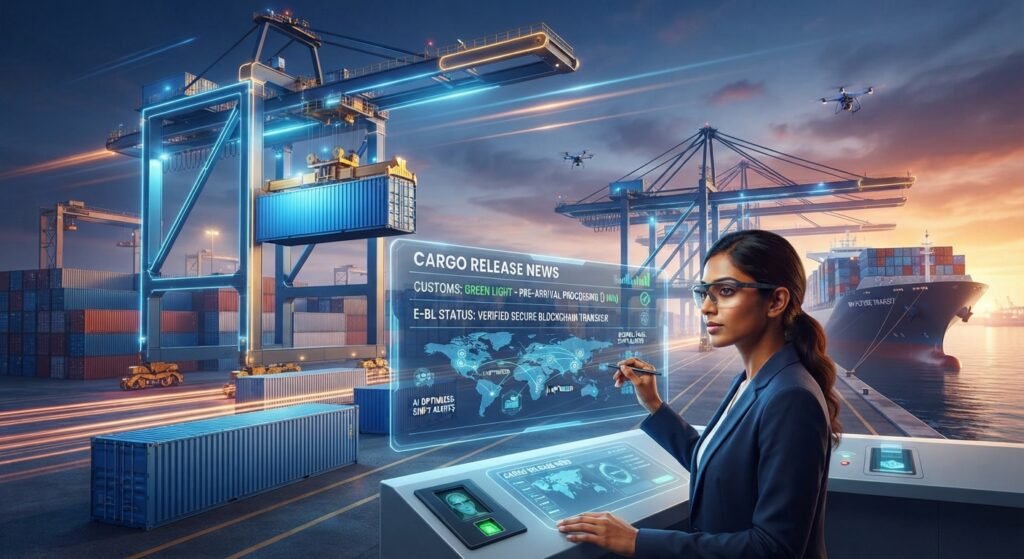
Waiting days for a shipping container to clear port authorities used to be an unavoidable cost of doing business, but today’s cargo release news tells a radically different story. Global trade is undergoing a structural overhaul driven by artificial intelligence, mandatory digital documentation, and sudden geopolitical rerouting. In 2026, supply chain bottlenecks no longer stem solely from physical port congestion; instead, regulatory shifts, tariff whiplash, and cybersecurity protocols determine whether freight moves in minutes or stalls for weeks.
For importers, freight forwarders, and logistics managers, staying ahead of these operational updates is essential to protecting profit margins and avoiding costly demurrage fees. As maritime chokepoints shift and customs agencies adopt predictive risk modeling, legacy paper-based clearance methods are rapidly becoming obsolete. This comprehensive guide breaks down the major developments transforming freight clearance, compares traditional versus next-generation release workflows, and provides actionable strategies to keep your international shipments moving smoothly into 2027 and beyond.
1. AI-Driven Customs Clearance and Pre-Arrival Processing
Border agencies worldwide have transitioned from manual document verification to automated, API-first customs ecosystems. Rather than waiting for a vessel to berth before reviewing manifests, modern customs platforms evaluate shipment data hours or even days prior to arrival, issuing green-lane approvals while cargo is still in transit.
- Predictive Risk Scoring: Machine learning algorithms cross-reference Harmonized System (HS) codes, shipper histories, and geopolitical origin data to flag high-risk containers automatically, allowing compliant freight to bypass physical inspection.
- Single Window Integration: Following World Customs Organization (WCO) standards, national Single Window portals now allow traders to submit manifests, certificates of origin, and sanitary permits through a single unified digital gateway.
- Error Reduction Benchmarks: Industry data shows that automated customs validation cuts filing errors by up to 70% and reduces administrative clearance costs by roughly 30% to 40% compared to manual entry.
- 24/7 Autonomous Approvals: Round-the-clock algorithmic processing eliminates weekend and holiday backlogs at major maritime and air hubs.
2. The Mandatory Rise of Electronic Bills of Lading (e-BL)
Paper bills of lading have historically been one of the biggest friction points in international trade, often causing cargo to sit idle at destination terminals while couriered documents catch up. Recent cargo release news highlights aggressive regulatory and carrier mandates pushing the industry toward 100% digital title transfers.
- Instant Ownership Transfer: Cryptographically secured Electronic Bills of Lading (e-BL) enable exporters, banks, and consignees to endorse and surrender title documents in seconds rather than days.
- Elimination of Letters of Indemnity (LOI): Because digital releases happen instantaneously upon payment confirmation, importers no longer need to issue costly bank-backed LOIs to secure terminal gate-out privileges.
- Blockchain & API Interoperability: Leading ocean carriers and trade finance banks have standardized cross-platform APIs, ensuring an e-BL issued on one network is legally recognized across global port community systems.
- Fraud Prevention: Tamper-evident digital signatures drastically reduce the risk of counterfeit release orders and document manipulation at high-volume ports.
3. Geopolitical Chokepoints and Rerouted Trade Corridors
Global freight release timelines are deeply intertwined with maritime security and shifting trade lanes. Throughout 2026, heightened security risks in the Strait of Hormuz and ongoing adjustments in the Red Sea have forced carriers to alter vessel schedules, resulting in sudden terminal surges at alternative ports.
- Diversion to Overland and Secondary Gateways: When primary maritime chokepoints restrict vessel crossings, carriers increasingly utilize Omani ports, Baltic terminals, and cross-border rail bridges, requiring forwarders to rapidly adapt to unfamiliar local customs regulations.
- Blank Sailings and Bunching: Scheduled vessel cancellations—such as the 58 blank sailings recorded across major East-West trades during peak autumn shipping windows—create “vessel bunching,” where multiple mega-ships arrive simultaneously and overwhelm local customs inspection bays.
- Air Cargo Split Dynamics: While high-value semiconductor and AI hardware shipments enjoy priority express clearance, general e-commerce air freight faces stricter de minimis scrutiny and longer terminal dwell times at congested hubs like Mumbai.
4. Tariff Volatility and Real-Time Duty Compliance
Trade policy has become one of the most unpredictable variables in modern logistics. Following major legal and executive shifts in 2026—including the invalidation of emergency tariff structures and the subsequent rollout of revised Section 301 duties across dozens of economies—customs brokers must recalibrate duty calculations in real time.
- End of De Minimis Exemptions: Both North American and European customs authorities have tightened or eliminated duty-free thresholds for low-value parcels, subjecting millions of direct-to-consumer shipments to formal entry procedures.
- Dynamic Landed-Cost Engines: Modern Enterprise Resource Planning (ERP) systems now connect directly to live tariff databases, automatically updating HTS classifications and country-of-origin rules before goods leave the factory floor.
- USTR Port Fee Reinstatements: Renewed port call fees and shifting USMCA origin audits require precise provenance documentation to prevent unexpected holds at destination terminals.
- Digital Product Passports (DPP): New European Union sustainability mandates require scannable digital records detailing material sourcing and carbon footprints prior to customs release.
5. Comparing Traditional vs. Next-Generation Cargo Release Workflows
Understanding how operational benchmarks have evolved helps logistics teams identify bottlenecks in their own supply chains. The table below outlines the measurable differences between legacy clearance workflows and modern automated release systems.
| Operational Metric | Legacy Paper-Based Clearance | Next-Gen Automated Release (2026+) | Primary Business Impact |
| Document Submission | Manual PDF uploads, physical couriers, and faxed manifests | Direct API-to-Single-Window data transmission | Eliminates duplicate data entry across agencies |
| Average Clearance Time | 2 to 5 business days post-arrival | Pre-arrival approval (under 2 hours post-discharge) | Prevents demurrage and terminal storage penalties |
| Title & Release Auth | Physical Bill of Lading surrender at carrier counter | Instant cryptographic e-BL endorsement | Accelerates cash-to-cash cycles and working capital |
| Inspection Selection | Random manual sampling and static rule checks | AI predictive risk scoring and non-intrusive scanning | Fewer physical container exams for compliant shippers |
| Cargo Security & Fraud | Vulnerable to forged release pins and insider theft | Biometric terminal access and encrypted release tokens | Protects high-value freight from organized theft rings |
6. Biometric Security and Combating High-Value Cargo Theft
A critical theme in recent cargo release news is the alarming rise in strategic freight theft. According to supply chain security data from Verisk CargoNet, while overall theft incidents have fluctuated, financial losses surged past $304 million as criminal syndicates shifted focus from high-volume consumer goods to concentrated, high-value electronics, pharmaceuticals, and semiconductors.
- Fictitious Pickup Prevention: Criminals frequently exploit weak release verification by spoofing carrier identities and presenting falsified pickup numbers at port gates.
- Biometric Gate Authentication: Major marine terminals and inland rail ramps now mandate biometric driver verification alongside two-factor encrypted release tokens before lifting a container onto a chassis.
- IoT Smart Seals and Geofencing: Electronic container seals transmit real-time tamper alerts and GPS telemetry directly to customs authorities, proving chain-of-custody integrity throughout transit.
- Vetted Carrier Networks: Shippers are moving away from open spot-market load boards for sensitive freight, relying instead on closed networks of pre-audited drayage providers.
7. Real-World Case Studies: How Industry Leaders Accelerate Release Times
To see how these innovations translate into measurable supply chain resilience, consider two recent operational deployments from global freight forwarders and enterprise importers.
| Case Study Profile | Core Operational Challenge | Implemented Release Solution | Quantified Outcome |
| Mid-Size European Apparel Importer | Frequent 4-day port holds in Rotterdam due to manual certificate verification and paper bills of lading. | Integrated an API-first Single Window customs platform paired with mandatory supplier e-BL issuance. | Cut average terminal dwell time by 68% and eliminated €140,000 in annual demurrage charges. |
| North American Tech Hardware Distributor | Elevated risk of fictitious pickups and tariff reclassification delays on Asian semiconductor imports. | Deployed pre-arrival AI tariff auditing, IoT container seals, and biometric drayage gate verification. | Achieved 99.4% green-lane pre-clearance and zero security incidents across 1,200+ containers. |
Frequently Asked Questions (FAQs)
What is the fastest way to avoid customs holds in current cargo release news?
The most reliable way to prevent customs holds is to implement pre-arrival electronic data submission at least 24 to 48 hours before your vessel or aircraft arrives. Using an API-connected customs broker to validate Harmonized System (HS) codes, commercial invoices, and Electronic Bills of Lading (e-BL) ensures regulatory algorithms clear your shipment before it even touches the terminal tarmac.
How do Electronic Bills of Lading (e-BL) speed up port gate-out times?
Traditional paper bills of lading must be physically stamped, couriered across borders, and surrendered at a carrier’s local office before a delivery order is issued. An e-BL uses secure digital encryption to transfer legal title instantly online, allowing port terminals to generate an automated gate-out release pin within minutes of freight payment.
Why are demurrage and detention fees rising despite faster customs software?
Even when customs authorities clear a shipment electronically, physical bottlenecks—such as inland drayage shortages, chassis deficits, and vessel bunching from blank sailings—can prevent drivers from retrieving containers within the port’s allotted free time. Coordinating destination trucking appointments prior to vessel arrival is essential to avoid daily storage penalties.
What role does artificial intelligence play in modern customs inspections?
Customs agencies use artificial intelligence to analyze millions of historical trade records, supplier compliance scores, and anomaly patterns in real time. Instead of halting shipments randomly, AI flags only those containers with mismatched weights, suspicious routing, or irregular valuations, allowing verified shippers to pass through automated green lanes untouched.
How can small and mid-sized importers prepare for upcoming trade compliance changes?
Smaller importers should partner with technology-enabled third-party logistics (3PL) providers or digital freight forwarders that offer built-in Single Window connectivity. Automating tariff lookups, auditing supplier documentation prior to origin departure, and adopting digital payment rails provide enterprise-grade compliance without requiring massive internal IT investments.
Conclusion
Staying informed on the latest cargo release news is no longer just a routine task for customs brokers—it is a core competitive advantage for any business moving goods across borders. As global supply chains navigate geopolitical rerouting, evolving tariff structures, and increasingly sophisticated cargo theft, the gap between digitally integrated shippers and those clinging to legacy paperwork continues to widen. Embracing automated pre-arrival clearance, Electronic Bills of Lading, and biometric terminal security empowers logistics teams to transform border crossings from unpredictable bottlenecks into seamless, transparent handoffs.
To protect your supply chain against unexpected delays and rising terminal fees, start by auditing your current documentation workflow. Reach out to your freight forwarder or customs broker today to verify their API integration with national Single Window portals and begin transitioning your key trade lanes to digital bills of lading. For deeper insights into optimizing your international freight operations, explore our guides on landed-cost forecasting and supply chain risk management.